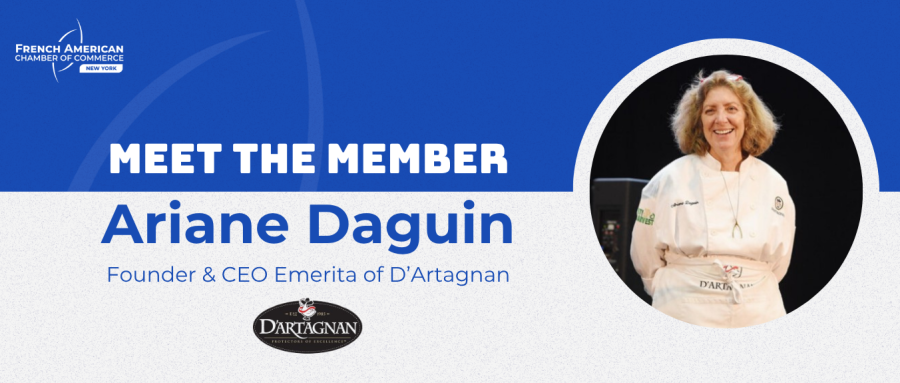
From the kitchens of Gascony to the forefront of the American culinary landscape, Ariane Daguin has built a career defined by conviction, craftsmanship, and an unwavering commitment to authenticity. As the founder of D’Artagnan, she played a pioneering role in reshaping how quality, sourcing, and ethics are understood in the U.S. food industry—long before sustainability became a mainstream priority. In this conversation, Ariane reflects on the deep influence of her Gascon heritage on her leadership philosophy, the lessons she learned navigating a male-dominated industry, and her steadfast belief that integrity, transparency, and long-term thinking are the true markers of success.
Your journey began in the kitchens of Gascony and led to founding D’Artagnan in the U.S., helping redefine American perceptions of quality food. Looking back, how has your heritage shaped your leadership philosophy and commitment to authenticity in business?
I was raised in a small Michelin starred hotel restaurant in Gascony, South West France. In Gascony, food is not an ingredient — it is identity, land, animal, season, and honor. You do not cut corners because you are accountable to your neighbor, to your farmer, to your grandmother’s standards.
When I founded D’Artagnan in the United States, I did not see myself as creating something new; I saw myself as translating a code of conduct. My leadership philosophy is profoundly Gascon: say what you mean, stand behind your word, never compromise on quality for short-term gain. Then you can be proud and brag and celebrate your accomplishments.
Authenticity in business is not marketing language. It is traceability, transparency, and the courage to say “no” when scale threatens integrity. Heritage gave me a compass. America gave me the runway. I used both.
As a woman who built and led a renowned company in a traditionally male-dominated industry, what were some of the most pivotal leadership lessons you learned and how have they influenced your approach to mentoring other women entrepreneurs?
When I started, I was often the only woman in the room (mostly the kitchen of restaurants)— and certainly the only one speaking with a French accent about foie gras. I learned quickly that credibility does not come from marketing subterfuge, it comes from the authenticity of your knowledge.
The most pivotal lessons were these: competence is the strongest argument; and reputation compounds exponentially. I also learned that resilience must be quiet and consistent. You do not win by imitating the dominant culture; you win by excelling within your own identity. In mentoring women entrepreneurs, I emphasize ownership — ownership of numbers, negotiation, and narrative. If you do not define your story, someone else will.
D’Artagnan was early in championing humane, antibiotic-free, and sustainable practices long before they were mainstream. How do you see the role of businesses, and especially women leaders, in driving ethical innovation in food and agriculture today?
Yes, D’Artagnan championed humane raising, antibiotic-free practices, and sustainability long before those words were fashionable. At the time, it was considered idealistic. Today, it is considered necessary.
Businesses must understand that ethics are not a cost center — they are risk management, brand equity, and long-term viability. In agriculture especially, shortcuts are cumulative and destructive.
Women leaders often bring a systems perspective. We tend to think in terms of generational continuity rather than quarterly returns. That mindset is critical in food and farming, where soil, animal welfare, and public health are interdependent.
Ethical innovation requires courage at the supply chain level. It requires leaders willing to accept slower growth and above all refusal to compromise in exchange for deeper trust.
You’ve built a business alongside your daughter, and your leadership impacts multiple generations. What wisdom would you most like to pass on to the next wave of women leaders both inside and outside the culinary world?
Building All One One All Farm alongside my daughter has been one of the great privileges and happiness of my life. It forces clarity. You cannot preach values at home and ignore them at work. The wisdom I most want to transmit is simple but demanding: be financially savvy, protect your reputation, choose partners — in business and life — who respect your ambition and never confuse growth with success. True leadership is stewardship. If what you build cannot survive you, then you have built a job, not a legacy.
During Women’s History Month, what message do you hope other women — especially those beginning their careers or pursuing entrepreneurial dreams — take away from your story of perseverance, passion, and purpose?
Perseverance is not glamorous. It is repetitive discipline. Passion is not emotion; it is sustained commitment. Purpose is not a slogan; it is alignment between what you believe and what you build. Do not wait for permission. If you see a standard that needs raising, raise it. If you see a gap in the market, fill it. If you encounter resistance, let it sharpen you, not silence you. History is shaped by women who insisted on excellence before it was expected of them. Build something worthy of your name — and then defend it.
–